

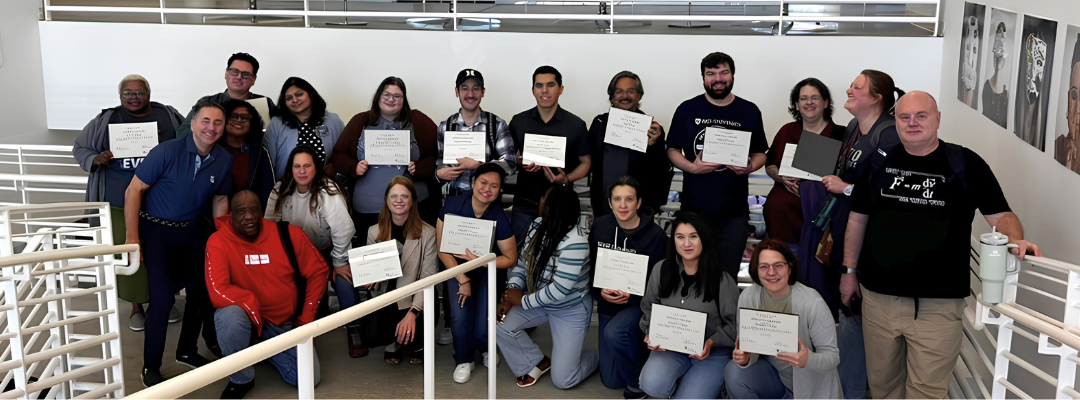
Rice University’s Center for College Readiness successfully concluded its new Advanced Placement (AP) Community of Practice workshop on Feb. 28, 2026, marking a significant milestone in regional educational outreach.
The comprehensive professional development program convened a diverse group of 28 educators representing 12 Houston-area school districts. Designed to elevate AP instruction across the region, the workshop provided a vital collaborative space where teachers could exchange advanced instructional strategies, build professional community, and solve complex problems related to high-stakes exam preparation.
By equipping teachers with highly effective, student-centered pedagogical tools, the initiative ensures that local educators do not have to navigate the rigorous demands of AP instruction in isolation, ultimately fostering long-term confidence and classroom excellence.
"At the Center for College Readiness, a key part of our mission is to bridge the gap between high school preparation and university-level expectations, and this workshop perfectly embodies that commitment," said David Johnston, director of the Center for College Readiness. "By fostering a true community of practice, we are empowering teachers to cultivate deep critical thinking and adaptability in their students. This program provides educators with the robust resources and collaborative networks they need to transform their classrooms, ensuring that both new and veteran teachers feel fully supported in guiding their students toward AP success."
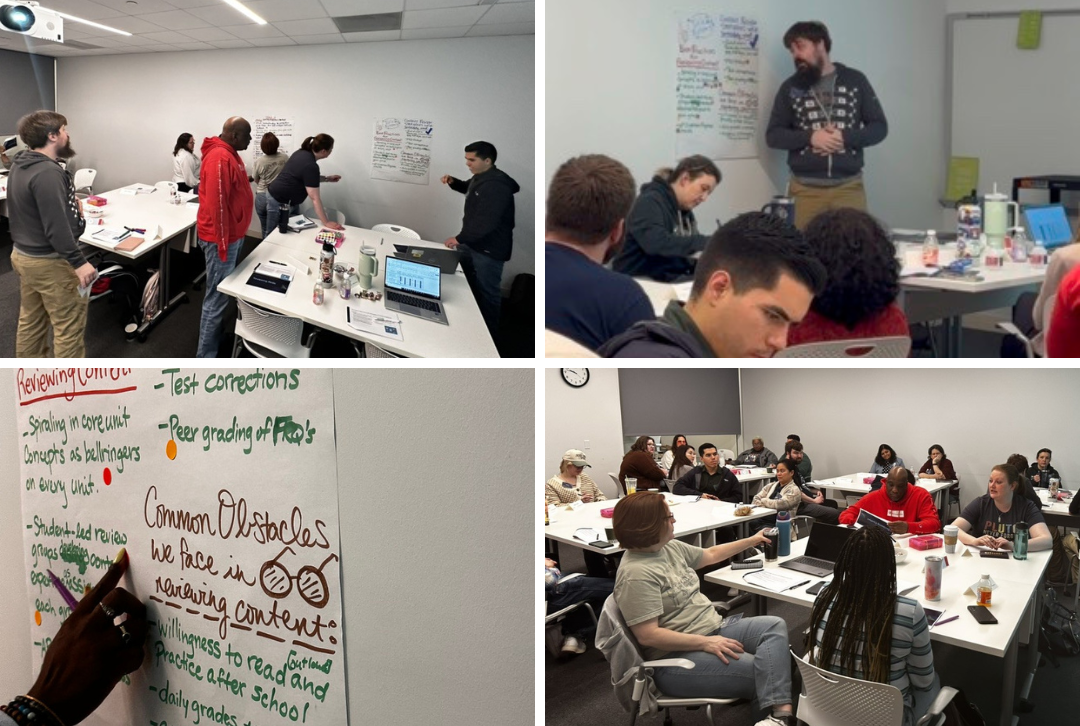
Deep Dives and Differentiated Learning: Inside the Sessions
The structure of the "AP Community of Practice" workshop offered a robust, carefully curated itinerary that focused extensively on resource navigation, targeted skill development and collaborative planning. Spanning multiple key areas of educational leadership, the professional development opportunity was delivered through a series of three strategic sessions designed to build foundational skills before branching into subject-specific methodologies.
Session One: Foundation & Data
The opening session concentrated heavily on navigating official AP resources and seamlessly integrating student data into everyday instruction. Key takeaways for the participants included:
- Critical Thinking: Strategies to cultivate essential soft skills such as self-management, adaptability, and complex problem-solving within the student body.
- AP Classroom Utilization: Direct training on maximizing the utility of AP Daily Videos, Topic Questions, and an expansive online bank containing over 15,000 question items to monitor student progress dynamically.
- Classroom Environment: Methods for facilitating negotiation during collaborative group projects and establishing emotionally supportive classroom environments.
Session Two: Subject Breakouts
Moving from general instructional theory to discipline-specific application, participants divided into 11 specialized breakout groups led by veteran AP instructional leaders. These tailored environments represented 15 distinct AP courses, including AP Human Geography, AP United States Government and Politics, AP English Language and Literature, and AP Statistics. The localized setups allowed educators to engage in deep dives regarding course-specific curriculum pacing, structural syllabus challenges and content nuances.
Educators highly praised the immediate, practical relevance of these collaborative sessions. Teena Marie Bautista, an AP Language and Composition teacher, highlighted the direct benefits of learning from experienced peers. "I tried the differentiated strategy from Ms. Dulce, my breakout lead, and it was amazing," she noted. "The students were honest about recognizing their levels and were accountable for completing the work assigned to each level. I appreciate hearing excellent ideas from different teachers, and I am excited to apply what I learned in my classes."
Kim Raines, an AP Statistics teacher, expressed similar gratitude for the high-caliber resources shared during the event. "I am using AP Classroom resources throughout the year, and my students are being challenged with AP-level rigor," Raines stated. "The hexagonal thinking review strategy was very useful. Thank you for always making the trainings at Rice worthwhile. I never walk away without something useful to implement in my classroom."
Session Three: Strategic Review
The final leg of the workshop targeted immediate exam readiness by employing a comprehensive, three-pronged instructional approach:
- Content Review: Specialized content groups collaborated to build comprehensive review outlines tailored precisely to their curriculum timelines.
- Skill Review: Teachers designed interactive, student-centered activities aimed at differentiating skill application based on unique learner needs.
- FRQ Strategy: Educators brainstormed efficient "quick feedback" methodologies to significantly improve student writing, analytical stamina and scoring performance on Free-Response Questions (FRQs).
Measurable Impacts and Classroom Transformations
The broader influence of the AP Community of Practice workshop extends well beyond the physical walls of the Rice University campus. By the numbers, the workshop successfully impacted 28 direct participants across 12 distinct school districts, covering 15 AP courses and resulting in 10 earned CPE hours per teacher. Most notably, the pedagogical enhancements and advanced curriculum designs developed during the weekend are projected to directly benefit more than 700 AP students across the greater Houston area each academic year.
For many attending educators, the program served as a crucial catalyst for shifting classroom dynamics and increasing student agency.
Heather Lyon-Southard, who teaches AP Human Geography, emphasized how the collaboration directly influenced her lesson planning. "Our last meeting discussed pacing and key ideas," Lyon-Southard shared. "This has helped with planning and has allowed me to release more responsibility to students for their learning outside of class. I also gained helpful ideas on using peer grading in FRQs."
Whitney Kelley, who teaches AP Statistics, echoed this sentiment, affirming the immediate utility of the curriculum tools. "This training was very applicable to my classroom, and I was able to implement many of the new strategies with my students this year," Kelley observed.
The emphasis on peer collaboration and student-centered review methodologies was also deeply appreciated as the academic year neared its peak testing window. Kayleigh Chambers, an AP World History teacher, remarked, "As we move closer to exam review time, many of the strategies shared today were student-centered, which I love and plan to implement in my classroom." Chambers added, "Thank you so much for organizing this program! I loved being able to interact with new AP teachers."
A Lasting Network for Educational Excellence
By investing deeply in the professional trajectories of local instructors, Rice University’s Center for College Readiness continues to strengthen the foundational pipeline of secondary education in the region. The workshop succeeded not only in distributing data-driven instructional tools and resource-navigation skill sets but also in establishing an enduring professional safety net for teachers entering high-pressure instructional environments.
The program's profound professional relief and empowerment were clearly articulated by Sara Taylor Richard, a first-year AP Psychology instructor. Richard highlighted a specific peer-grading concept she adopted from a fellow attendee, having her students grade sample answers from the AP Classroom portal and justify their evaluative feedback in writing.
"This was a top-notch community of practice, and it has helped me tremendously in my performance and peace of mind as a first-year AP teacher," Richard reflected. "Both my students and I have benefited — and will continue to benefit — from what I learned here."
Through sustainable initiatives such as the AP Community of Practice, Rice University remains a vital champion for local school districts, cultivating educational environments where teachers thrive and students reach their highest scholastic potential.
To learn more about Rice’s Center for College Readiness, visit: collegeready.rice.edu.