

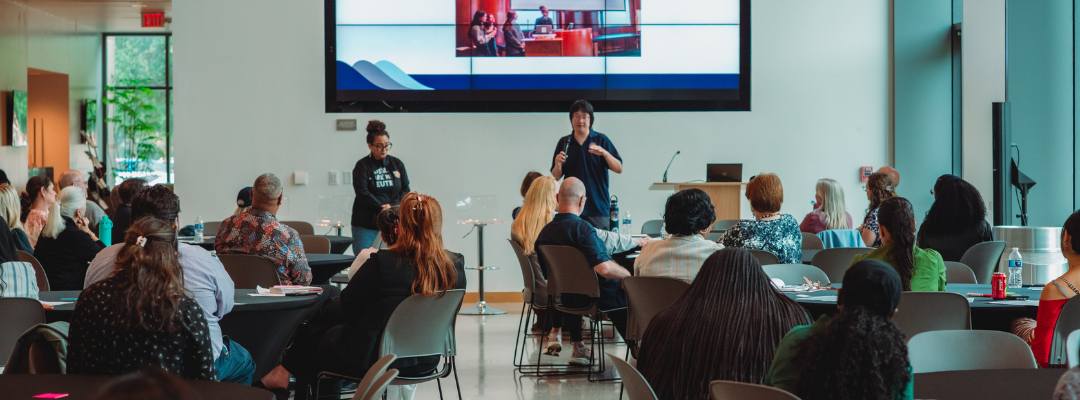
The power of narrative to bridge divides and foster community was on full display May 6 at the "Lifelong Civic Leadership Forum: Imagining and Shaping Shared Futures." Hosted by the Rice Center for Community Learning and Engagement (CCLE) and the Center for Civic Leadership (CCL), the event drew more than 60 participants to the Rice campus, including local community members alongside Rice students, faculty and staff.
"This forum represents our commitment to creating spaces where community wisdom and academic inquiry meet," said Korin Brody, interim director of the CCLE. “We don’t just share stories to pass along information; we share them to connect with others. By listening to one another, we can imagine and build a more equitable Houston and beyond."
One Story at a Time
The afternoon began with a keynote presentation titled "Imagining and Shaping Shared Futures: One Story at a Time," delivered by Tabea Linhard, Ph.D. Linhard, the Joseph and Joanna Nazro Mullen Professor in Humanities and faculty associate director of the Center for the Study of Women, Gender and Sexuality, challenged the audience to consider the psychological and social weight of the stories we tell.
Using the "Heider-Simmel Illusion" — a classic study where viewers attribute complex social motives to simple moving shapes — Linhard illustrated that humans are biologically wired to impose narrative meaning on the world around them. "We cannot 'not' tell a story," Linhard noted, emphasizing that while lives are composed of raw emotions and events, we understand those lives through the lens of narrative.
Linhard also addressed the "Danger of a Single Story," a concept popularized by Chimamanda Ngozi Adichie. She shared personal reflections on how media-driven "single stories" regarding immigration can dehumanize individuals, and she highlighted digital archives like Moving Stories and Humanizando la Deportación that work to restore the complexity and dignity of migrant experiences.
Reclaiming History: The Texas Tribal Buffalo Project and Buffalo Soldiers Oral Histories
Following the keynote, the forum shifted focus to a specific local application of storytelling and research — The Texas Tribal Buffalo Project (TTBP) — which served as an introduction to how oral histories can support community restoration and "intergenerational healing."
Presented by one of the project leads, Weston Twardowski, Ph.D., detailed the TTBP’s mission to reconnect Texas Indigenous lineal descendants through the restoration of the buffalo (iyane’e). The project utilizes oral history interviews to uncover lived experiences and preserve cultural depth that traditional archives often overlook.
The session underscored the importance of "Indigenous Data Sovereignty" and the role of empathy, active listening and open-ended questions in conducting ethical community research.
Following this, Michelle Tovar, Ed.D., director of education at the Buffalo Soldiers National Museum (BSNM) and Jason Fung, archivist at BSNM, highlighted the role of story in the institution's mission to explore and display the profound contributions of African Americans in the military. The pair shared an overview of their Oral Histories Initiative and its aim to record the stories of Korean and Vietnam War veterans and their families.
Workshop: Community Building Through Storytelling
The interactive heart of the forum was a workshop led by Danika Brown, Ph.D., executive director of the CCL, and Rachel Bonini, Ph.D., associate director of the CCL. Titled "Community Building and Future-Shaping Through Storytelling," the session moved participants from theory into practice.
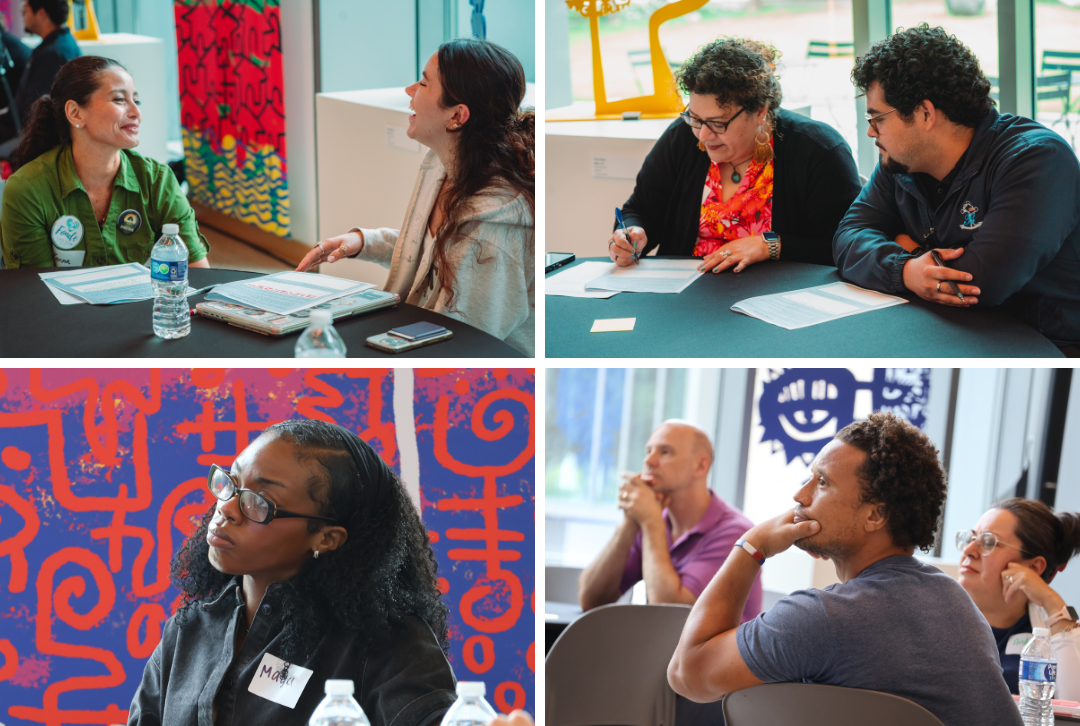
Guided by the principle that "we can’t build what we can’t imagine," the workshop employed activities to facilitate deep listening. Participants were asked to "Story Share" — reflecting on a time they imagined a new future that made them feel hopeful — and then engage in a "Story Exchange." In this exchange, partners told each other's stories in the first person, a technique designed to build radical empathy and challenge personal biases.
The workshop emphasized group norms of inherent dignity and curiosity. "Others' stories are only theirs to tell," the facilitators reminded the group, stressing the importance of honoring confidentiality while learning from the collective "imagined futures" of those in the room.
Nosh and Network
The forum concluded with a "Nosh and Network" session, allowing attendees to continue their conversations over food. This informal gathering allowed community partners, faculty and students to forge new connections and discuss potential collaborations. Participants were encouraged to leave "Share-Out" sticky notes detailing one step they intended to take toward building a shared future based on the day’s lessons.
As the event drew to a close, the recurring theme was clear: storytelling is not a passive act but a civic responsibility.
“By learning to listen to the multitude of stories that exist within the Houston community, we are better equipped to act as agents of positive, meaningful change,” Brody said.
To learn more about Rice’s Center for Community Learning and Engagement, visit: https://continue.rice.edu/community-learning-engagement